
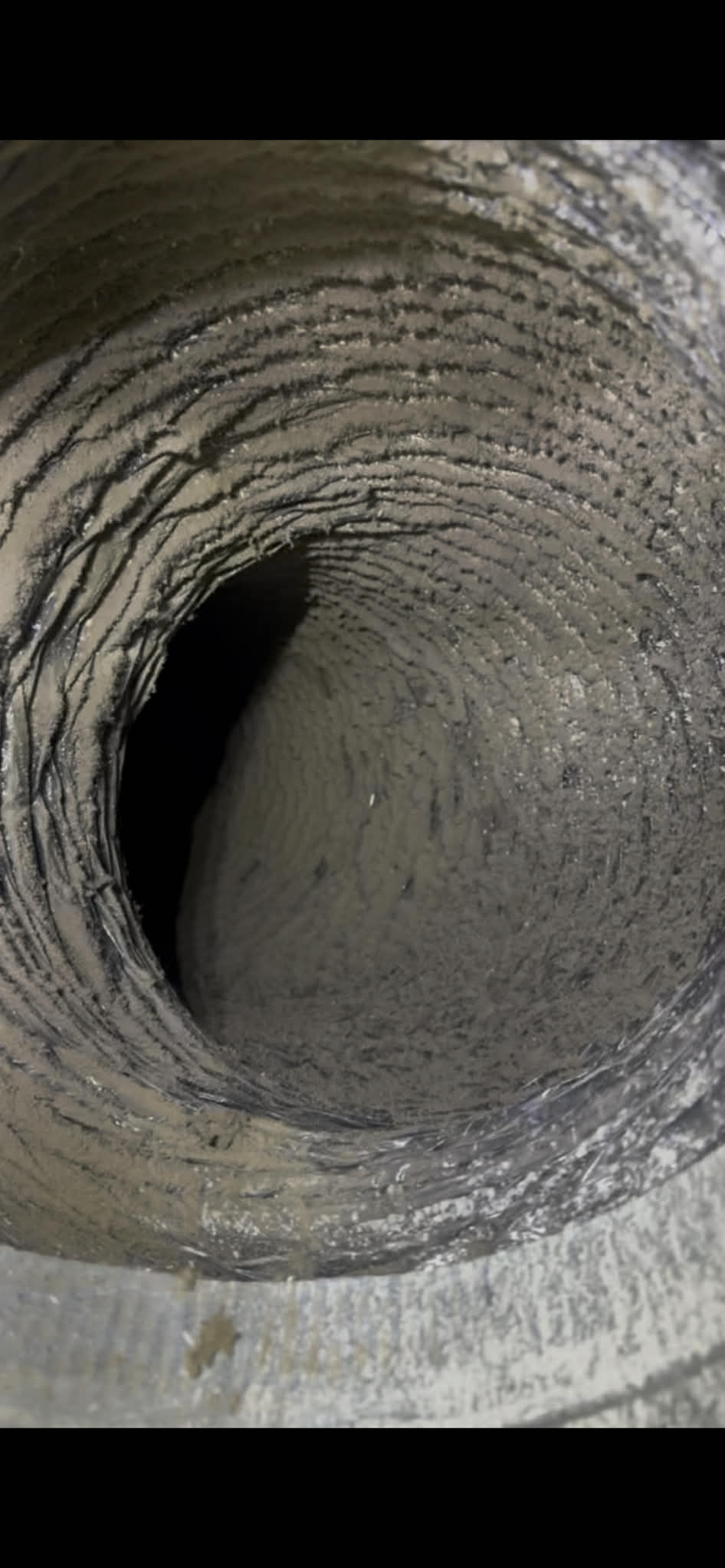
If your Memphis summer power bill keeps climbing — and your AC seems to run constantly without ever cooling the house down — there’s a good chance the problem isn’t your HVAC unit. It’s the ductwork carrying air through it.
Dirty air ducts are one of the most overlooked causes of high energy bills. They quietly force your air conditioner to work 15-30% harder than it should, all summer, every summer, until they’re properly cleaned.
How Dirty Air Ducts Hurt Your HVAC Efficiency
Your AC works by pulling warm air from your house, cooling it across the evaporator coils, and pushing the cooled air back out through the duct system. Every cubic foot of air has to travel through that ductwork — and if the ducts are coated with dust, pet dander, pollen, and debris, you have a problem.
Picture trying to breathe through a partially blocked straw. That’s what your HVAC is doing 24/7 when the ducts are dirty. Two things happen:
- Airflow drops. Restricted ducts deliver less cool air to each room, so your thermostat keeps calling for more.
- The AC runs longer. Longer run-times mean higher electricity use — even though the cooling output stays the same.
Department of Energy data suggests that dirty ducts and a clogged air filter can reduce HVAC efficiency by up to 30%. In Memphis summer, where AC runs almost continuously from June through September, that’s hundreds of dollars in unnecessary cooling costs every year.
The Math: How Much Are Dirty Ducts Really Costing You?
Memphis homeowners typically pay $180–$350 a month on electricity in the summer peak. If 20% of that bill is being wasted on inefficient airflow through dirty ducts, that’s $36–$70 a month going straight into the air. Over a full cooling season (June through September), you’re losing $150–$280 to inefficiency you could fix in a single morning.
Air duct cleaning typically costs $300-500 for an average Memphis home and lasts 3-5 years. Do the math: cleaning your ducts can pay for itself in one summer.
7 Signs Your Air Ducts Are Hurting Your AC
You don’t need a meter to tell when duct buildup is dragging down your system. Look for these signs:
- Power bill climbing year-over-year with no change in usage habits.
- AC running constantly but never quite reaching the thermostat setting.
- Uneven cooling — one room is freezing, another is sweltering.
- Dust settling on furniture within a day of cleaning.
- Musty smell when the AC kicks on.
- Allergies acting up when you’re home, especially in summer.
- It’s been 3+ years since the last professional cleaning (or you’ve never had it done).
Why Memphis Homes Are Especially at Risk
A few factors make Memphis homes worse than average for duct buildup:
- High pollen counts. Memphis ranks among the worst U.S. cities for spring pollen — and most of that pollen settles into ductwork.
- Long cooling season. AC systems running from May through September push 5x more air through the ducts than a system in a milder climate, so buildup accumulates faster.
- Older housing stock. Many Memphis-area homes — Cordova, Bartlett, Germantown’s older neighborhoods — were built in the 1970s-90s. Original ductwork that’s never been cleaned is the rule, not the exception.
- Humidity. Memphis humidity helps dust and pollen stick to duct walls rather than blowing through.
What Actually Lives in Neglected Memphis Ductwork
When we open up a duct system that hasn’t been touched in a decade, this is what typically comes out:
- Pollen and mold spores that get pulled in through the return every spring and then re-circulate every time the AC kicks on. Memphis’s year-round pollen index is among the highest in the country — oak, cedar, ragweed, and grass pollen all show up in duct samples we’ve pulled from Cordova and Bartlett homes.
- Pet dander and hair, which are lighter than dust and travel farther through the system. Even one shedding pet loads a duct system fast.
- Construction debris from the original build — drywall dust, insulation fibers, sawdust, and even nails. A surprising number of homes were commissioned with the ducts never vacuumed after construction.
- Dead insects and rodent nesting material. This is more common in attic-mounted return systems and in homes with older, deteriorating flex duct.
- Microbial growth. When Memphis humidity meets dust inside a dark, air-conditioned duct, you get the perfect conditions for mold to set up shop — especially near the AC coil and drain pan.
Every time your AC runs, the fan pushes some of this back into the air you breathe. If you or a family member is dealing with unexplained allergy symptoms, asthma flare-ups, or headaches that get worse when the AC runs, the ducts are one of the first places to look.
The Duct-Dryer Vent-Chimney Connection
These three systems all move air in and out of your house, and neglect in one usually shows up in the others. When we clean ducts in a home that’s never had it done, we almost always find:
- A dryer vent that’s at least half-clogged with lint, forcing longer dry cycles and adding fire risk.
- A chimney with debris, animal nests, or creosote that hasn’t been swept since the house changed hands.
None of these three systems fail loudly. They fail slowly, on the electric bill and in air quality — until one day the dryer overheats or the chimney backdrafts. Handling all three on the same visit is the reason we bundle discounts when we’re already at your house.
How to Check When Your Ducts Were Last Cleaned
Here’s a 30-second test: pull off one of your return-air vent covers and shine a flashlight inside. If you can see visible dust buildup, lint, or worse — a layer of gray fuzz coating the inside walls — your ducts are overdue.
If you’ve owned the home for more than 5 years and have never had a professional cleaning, assume they need it. Most homes do.
What a Professional Air Duct Cleaning Includes
Done right, professional duct cleaning is a thorough multi-step process — not a quick vacuum hose down a vent:
- Inspection. Full walkthrough of the HVAC system and ductwork to identify buildup, leaks, and any other issues.
- Containment. Floors and furniture protected, vents sealed off to keep dust out of your living space.
- HEPA-vacuum cleaning. Negative-air machine pulls debris from every duct run, register, and the air handler.
- Mechanical agitation. Rotating brushes break loose stuck-on buildup the vacuum can’t grab.
- Sanitization. EPA-approved antimicrobial treatment kills mold spores, bacteria, and odor-causing contaminants.
- Final inspection. Walk-through to verify the work and confirm airflow is restored.
A Common Add-On That Saves Even More
Many of our Memphis customers bundle dryer vent cleaning with their air duct service. A clogged dryer vent forces the dryer to run 2-3 cycles to dry a single load — another quiet electricity-burner. We typically discount the combo since we’re already at the house.
Frequently Asked Questions
How often should Memphis homeowners clean their air ducts?
The National Air Duct Cleaners Association recommends every 3–5 years for most homes. In Memphis specifically we lean toward the shorter end of that window because of the long cooling season, heavy pollen, and humidity that helps dust stick to duct walls. Homes with pets, smokers, or anyone with allergies should plan on the 3-year mark. Homes that have never been cleaned should book one now regardless of age.
Will cleaning my air ducts really lower my Memphis power bill?
Yes, meaningfully, if your ducts are dirty enough to be restricting airflow. Department of Energy data puts the efficiency loss from dirty ducts and a clogged filter at up to 30%. On a Memphis summer bill of $250–$350, that’s $50–$100 a month you’re paying for the same amount of cooling. A single cleaning typically pays back in one cooling season on a home that was overdue. It won’t fix a failing compressor or an undersized unit — but for the most common cause of “why is my bill so high?” it’s a fast fix.
Does duct cleaning help with allergies and asthma?
For a lot of our customers, yes. Memphis has one of the worst pollen loads in the country, and everything the AC pulls through the return ends up either caught in the filter or coating the inside of the ducts. Once the ducts are loaded, the fan pushes those particles back into the air with every cycle. Cleaning the system and pairing it with a good MERV-11 or MERV-13 filter is the fastest way to reduce indoor allergens. It won’t cure asthma, but a lot of Memphis parents notice their kids sneeze less and sleep better within a week.
Can I clean my own air ducts?
You can vacuum the visible portion of the register with a shop vac and change your filter on schedule, and both are worth doing. But a proper duct cleaning requires a truck-mounted or portable negative-air machine that can pull debris through 30+ linear feet of duct, plus mechanical agitation brushes that fit each duct size. Rental units aren’t powerful enough, and without agitation you’ll pull the loose dust but leave the caked-on layer that’s doing most of the damage. This is one of those jobs where the equipment is the difference.
How long does duct cleaning take, and do I need to leave the house?
A typical Memphis home takes 3–5 hours from setup to cleanup. Larger homes with multiple systems can go longer. You don’t need to leave — the containment protects your living space — but the equipment is loud, so a lot of customers use it as an excuse to run errands. Pets should be kept in a closed room away from the work area for their comfort. You’ll see the difference in dust settling within the first week.
Ready to Stop Overpaying on Cooling?
If your Memphis power bill jumps every June, dirty ducts are a great place to start. Learn more about our air duct cleaning service, or call (901) 687-7046 for a free quote.