
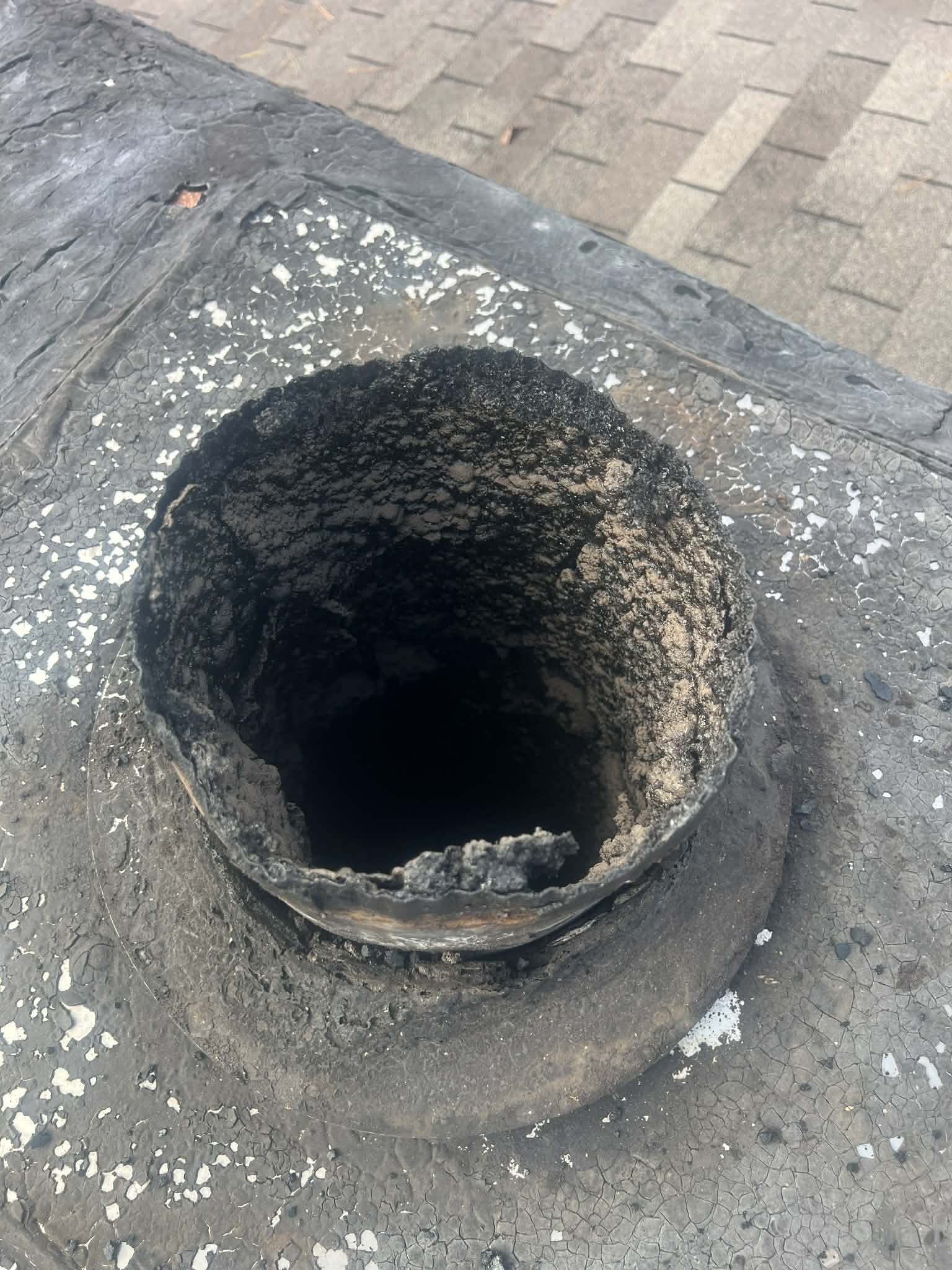
If you have a wood-burning or gas-log fireplace and you can’t remember the last time anyone professionally cleaned the chimney, you’re not alone — and you’re not safe. The U.S. Fire Administration reports more than 22,000 residential chimney fires every year, and almost all of them trace back to one cause: skipping the annual sweep.
This guide answers the questions every Memphis homeowner asks when fall cools off and the thought of lighting that first fire crosses their mind.
How Often Should You Clean Your Chimney?
The Chimney Safety Institute of America (CSIA) recommends a professional inspection every single year, plus cleaning whenever soot or creosote buildup reaches 1/8 inch or more. For most Memphis-area homeowners who burn a few times a week from November through February, that means cleaning every year, like clockwork.
Gas-log fireplaces still need an annual inspection, even though they don’t produce creosote. Birds nest in flues, dampers fail open, and chimney caps wear out — none of which you’ll notice until something goes wrong.
Wood-Burning, Gas, and Pellet Fireplaces — Different Rules for Each
Not every chimney is on the same maintenance schedule. What you burn matters as much as how often you burn it:
- Traditional wood-burning fireplaces generate the most creosote by far, especially when burning green or unseasoned firewood — which is common in Memphis where a lot of homeowners cut and burn oak or hickory from their own property without seasoning it long enough. Expect an annual sweep, and possibly a mid-season one if you burn heavily.
- Gas-log fireplaces don’t produce creosote, but they produce a fine white residue and can develop soot in the burner when the flame color isn’t adjusted correctly. Annual inspection is still critical — a partially blocked flue on a gas unit is a carbon monoxide risk, not a fire risk.
- Wood or pellet stove inserts vent through a stainless liner rather than the original masonry flue. Those liners need annual brush cleaning too, and the connector pipe between the stove and the liner is a common spot for creosote to concentrate.
- Prefabricated (metal) fireplaces use a Class A metal chimney with a specific inspection checklist — the chase cover, storm collar, and cap all wear differently than a masonry chimney. If your house was built after 1980, there’s a good chance this is what you have.
5 Warning Signs Your Chimney Needs a Sweep Right Now
Don’t wait for an annual reminder. If you notice any of these, call us:
- Strong smoky smell when the fireplace isn’t in use. A buildup of creosote or trapped soot makes the chimney smell musty and acrid — especially noticeable in summer when humidity is high.
- Smoke backing up into the house when you light a fire. The most common cause is a blocked flue. Stop using the fireplace immediately.
- Soot or black flakes falling into the firebox. That’s creosote breaking loose — a sign the buildup is significant.
- Animals or animal sounds in the chimney. Birds and squirrels nest in chimneys that don’t have caps. We’ve cleared more raccoon nests from Memphis chimneys than we can count.
- It’s been more than a year (or you can’t remember). If you can’t say with certainty when it was last cleaned, it needs cleaning.
What Creosote Actually Is (and Why It’s So Dangerous)
Creosote is the black, tar-like residue that forms when wood smoke cools inside the flue. It comes in three stages, and each stage is harder to remove than the last:
- Stage 1 is a light, flaky soot that a standard brush cleaning takes off easily.
- Stage 2 is a hard, shiny black deposit that needs a rotary tool to break loose.
- Stage 3 (glazed creosote) is a thick, tar-like coating that fuses to the flue wall — often requiring chemical treatment across multiple visits, or in bad cases, a full liner replacement.
The reason it’s treated so seriously: creosote ignites at around 451°F, but a chimney fire can reach 2,000°F in minutes. That’s hot enough to crack a clay liner, warp a metal one, and set attic framing on fire from the outside of the chimney. Most homeowners never realize their chimney had a fire — they just find puffy, marshmallow-like creosote deposits during the next sweep, which is the telltale sign that a small chimney fire already happened.
What Happens If You Skip Annual Chimney Cleaning
Three things go wrong, and they’re all expensive:
- Chimney fires. Creosote is one of the most flammable substances in your home. When it ignites, the fire moves up the flue at temperatures over 2,000°F. Even if it doesn’t spread to the rest of the house, it usually destroys the chimney liner — a $3,000–$8,000 repair.
- Carbon monoxide poisoning. A partially blocked chimney can push carbon monoxide back into your living room instead of venting it outside. This is especially serious with gas-log units.
- Structural damage. Creosote and moisture work together to break down mortar joints, crack crowns, and rust dampers. Skipping cleanings turns a $200 service into a multi-thousand-dollar masonry job.
Why Memphis Chimneys Wear Out Faster Than Most
Memphis’s climate is uniquely hard on masonry chimneys. Homeowners in Cordova, Bartlett, Germantown, Collierville, and East Memphis all deal with the same three factors:
- Freeze-thaw cycles. Winter temperatures in the Mid-South regularly bounce above and below freezing multiple times in a single week. Water that seeps into micro-cracks in the crown and mortar joints freezes, expands, and pries the masonry apart — a little bit every winter. By year 15, that unsealed crown that looked fine when the house was built is often a network of cracks.
- Heavy spring and summer storms. Wind-driven rain and hail damage chimney caps, dislodge storm collars, and drive moisture down the flue faster than in drier climates. After a big Memphis thunderstorm, it’s common to find debris in the firebox that wasn’t there the day before.
- High humidity. Even when it’s not raining, ambient humidity keeps creosote damp, which accelerates the corrosion of dampers, liners, and metal caps. It also makes that off-season chimney smell worse.
The practical takeaway: a chimney in Memphis needs more attention than one in a drier climate like Phoenix or Denver. An annual inspection catches small issues before another winter turns them into big ones.
What a Professional Chimney Sweep Actually Does
If you’ve never had your chimney professionally cleaned, here’s what to expect from a proper service:
- Full visual inspection — firebox, smoke chamber, flue interior, exterior crown and cap.
- Floor and furniture protection — drop cloths and a HEPA vacuum to contain dust and soot.
- Brush cleaning — chimney brushes sized exactly to your flue, run top-to-bottom to remove creosote and debris.
- Firebox and smoke chamber cleanup — the dirtier parts that quick-service providers often skip.
- Written report — what we found, photos of any damage, recommendations for repair if needed.
A proper chimney sweep in Memphis takes 1–2 hours and costs $200–$300 for a standard masonry chimney. Skip the $99 specials — they almost always involve cutting corners on inspection and cleanup.
When to Schedule Your Memphis Chimney Sweep
The smartest time to book is August through October. Here’s why:
- You beat the rush. Once the first cold snap hits in November, every chimney sweep in Memphis is booked out 3–6 weeks.
- You get any repairs done before burning season. If we find a cracked crown or damaged liner during the sweep, there’s time to fix it before you need the fireplace.
- Bird nests are gone. Spring/summer nesters have moved on, so we’re not clearing fresh nests.
- Better pricing. Off-season scheduling typically runs less than peak November/December rates.
How Much Does Chimney Cleaning Cost in Memphis?
For most single-flue Memphis homes, a chimney sweep with inspection runs $200–$300. Larger or multi-flue chimneys, or jobs that include minor repair work like a cap install, run higher. We provide a firm price after a brief look at the chimney — no estimates that change halfway through the job.
If you’d like to bundle services, we often combine chimney cleaning with dryer vent cleaning when we’re at your home — fire safety on both ends of the house in one visit.
Frequently Asked Questions
How much does a chimney sweep cost in Memphis?
A standard single-flue chimney sweep with inspection in the Memphis area runs $200–$300. Multi-flue chimneys, prefabricated units with unusual venting, or add-ons like a new chimney cap install push the price higher. Beware of $99 specials advertised in the fall — those typically cover only a quick brush pass and skip the smoke chamber and full inspection, which is where problems actually hide.
Can I clean my own chimney to save money?
Technically yes, but for most Memphis homeowners it’s a bad trade. You need the right brush size for your specific flue, a proper drop cloth setup so soot doesn’t coat your living room, and a working ladder tall enough for a 1.5- or 2-story roof. Even then, DIY cleaning almost never includes an actual inspection — and a cracked flue liner or damaged crown is exactly the kind of thing a homeowner would miss. Save DIY for the annual firebox sweep-out between visits, and let a pro handle the flue itself.
Does insurance cover chimney fire damage?
Most Memphis homeowner policies do cover chimney fire damage — but only if the insurance company can’t point to negligence as the cause. That’s where the annual inspection report matters. Adjusters routinely ask when the chimney was last professionally serviced. A file showing yearly maintenance strengthens your claim; a decade of “can’t remember” weakens it. This is another reason we leave a written report after every visit.
My fireplace is gas — do I really need it cleaned?
You need it inspected. Gas logs don’t produce creosote, but the flue still needs to vent freely. In Memphis we routinely find bird nests, wasp nests, and debris in gas flues that had gone years without a look — and a blocked gas flue vents carbon monoxide back into the house. An annual inspection is the minimum. Actual brush cleaning may only be needed every few years unless there’s visible soot on the logs or glass.
How long does a chimney sweep take?
A standard Memphis chimney sweep, from setup to cleanup, runs 1–2 hours for a typical single-flue masonry chimney. Add 30–60 minutes for multi-flue chimneys or if we find issues that need documented photos and a repair recommendation. We work clean — drop cloths, HEPA vacuum, and a full walk-through with you at the end — so plan a two-hour window and expect us to leave the room looking exactly how we found it.
Ready to Schedule?
Healthy Home Pros has cleaned thousands of Memphis-area chimneys since 2015. We’re licensed and insured, locally owned, and book up fast every fall.
Learn more about our chimney cleaning service, or call (901) 687-7046 for a free quote.